
Can You Sweep Your Own Chimney?
Yes, homeowners can generally sweep their own chimneys, though local rules, rental agreements, or other property requirements may apply. For a wood-burning flue, use the right equipment and stop if you find damage, heavy glazed creosote, or a blockage.
Need help now? (385) 243-7715
Can You Legally Sweep Your Own Chimney at Home?
For an owner-occupied home, a homeowner can generally do basic chimney cleaning without hiring a professional. Check local requirements and any lease or property rules that apply to your home; those may affect who can perform maintenance.
Being allowed to clean your own chimney does not mean every chimney is safe to clean yourself. A flue can hide cracks, loose liner pieces, animal nests, or hardened creosote that a household brush cannot remove. Treat sweeping as maintenance, not proof that the chimney is safe to use.
Choose DIY Chimney Cleaning or a Chimney Sweep Service
The right choice depends on what you can safely reach and what you see inside the fireplace and flue. Do not climb onto the roof or keep cleaning when the chimney shows signs of damage.
Basic, accessible soot
DIY cleaning may suit a cold chimney with light, loose deposits when you can work from inside the home with equipment made for your flue. You still need to check visible areas and stop if the brush catches or you find a blockage.
Heavy or glazed creosote
Call a professional when deposits look shiny, tar-like, or stuck to the flue. Brushing may not remove hardened buildup, and forcing the brush can damage the liner.
Damage, blockage, or uncertain condition
A professional sweep is the safer choice for cracks, loose masonry, a suspected animal nest, or a flue you cannot inspect. A sweep can assess the condition and explain which work the chimney needs.
Gather the Right Tools Before You Sweep Your Chimney
Only prepare for a DIY sweep if the fireplace and chimney are completely cold and you can do the work without roof access. Use equipment suited to the flue material and shape; a brush that is too large or too stiff can cause damage.
- A flue-sized chimney brush and rods — Choose a brush designed for your chimney liner and attachable rods that let you work from inside. Check the fittings before use so a loose brush head cannot fall into the flue.
- Protective gear and room covering — Use eye protection, gloves, and a suitable dust mask, then cover the hearth and nearby flooring. Check that the fireplace opening is sealed well enough to contain soot.
- A flashlight and inspection mirror — Use them to look at visible areas from a safe position. Check for cracks, missing material, obstructions, or glossy buildup; do not reach into the flue.
- A suitable ash vacuum or collection method — Keep settled debris contained and use equipment intended for fine ash and soot. Check the fireplace and surrounding floor for escaped dust before removing the coverings.
Need help now? (385) 243-7715
How to Sweep a Chimney Safely From Inside
These steps cover a limited, owner-level cleaning from below. Skip the DIY process if the chimney needs roof access, has a damaged liner, or contains deposits you cannot loosen with the proper brush.
- Let the fireplace cool completely — Do not begin while embers or hot ash may remain. Check the firebox and ash area before laying down protective coverings.
- Check the fireplace and flue opening — Use a flashlight to look for an animal nest, fallen masonry, cracks, or glazed creosote. Stop if you see any of these conditions instead of pushing debris farther into the chimney.
- Protect the room — Cover the hearth and nearby floor, and seal the fireplace opening around your work area as needed. Check that the coverings stay in place before brushing begins.
- Fit the brush and rods — Use a brush suited to the liner and connect the rods securely. Check each connection as you assemble it; do not use a brush that binds or feels too large for the flue.
- Brush only from a safe position — Work from inside the home with the rods and brush, following the tool maker’s instructions. If you cannot reach the area safely from below, stop rather than climbing onto the roof.
- Move the brush in controlled passes — Work the brush through reachable sections without forcing it past resistance. Check for loose pieces or a sudden blockage, and stop if the brush catches.
- Collect soot after it settles — Give loosened dust time to settle, then collect it with suitable equipment. Check the firebox, hearth, and covered floor for escaped soot before uncovering the room.
- Recheck visible areas — Look again with a flashlight for remaining deposits, damage, or debris. A clear view from the firebox does not verify the entire flue; arrange a professional assessment if you cannot see its condition.
Stop DIY Sweeping When You Find These Chimney Problems
A few warning signs mean a brush is not the next step. Do not light another fire until the problem has been assessed.
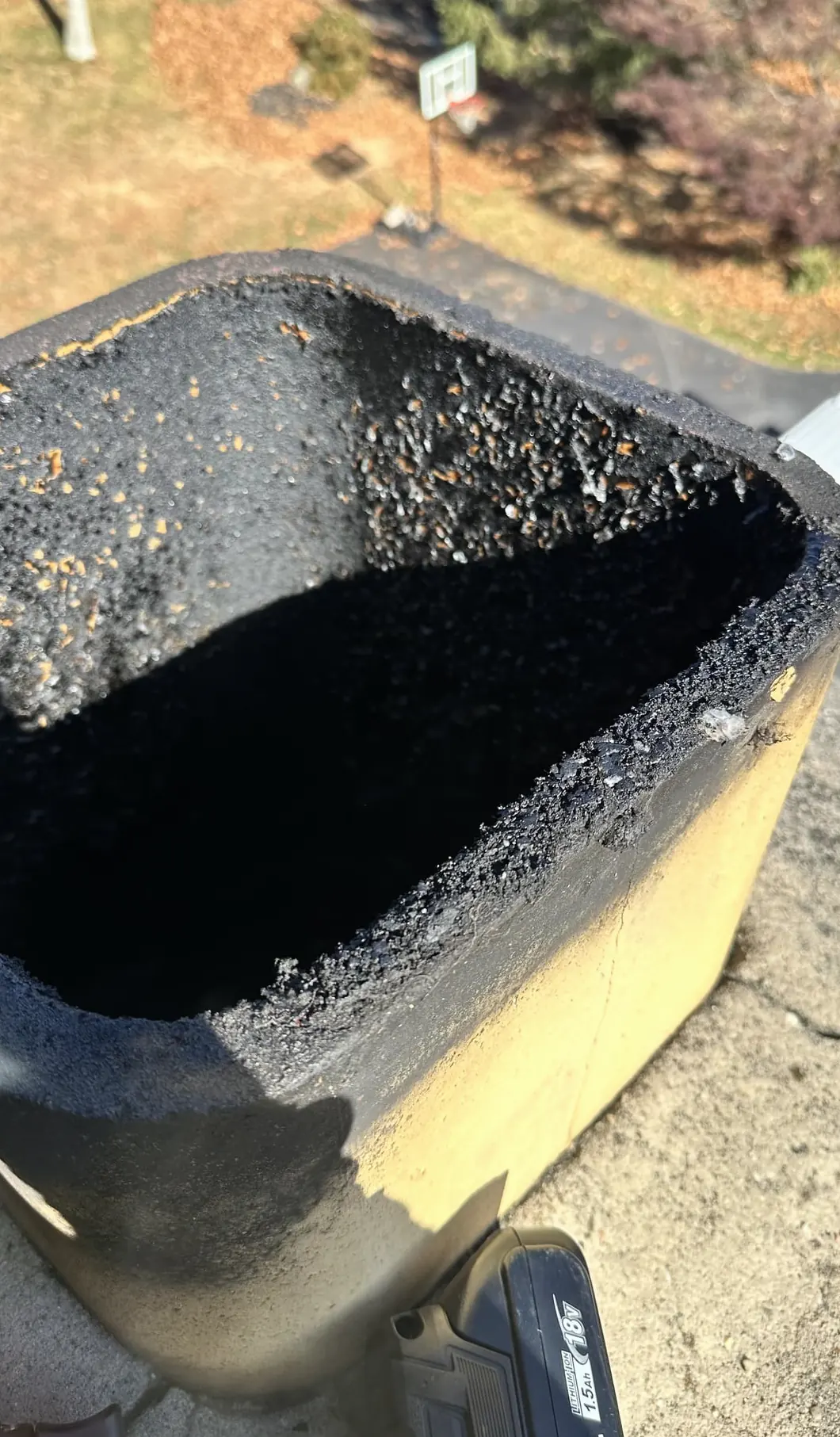
- Shiny, hardened deposits — Glossy or tar-like creosote can resist ordinary brushing. Stop rather than scraping aggressively or trying a household chemical remedy.
- Cracks, loose pieces, or missing liner material — These signs may indicate damage inside the flue or chimney structure. Avoid using the fireplace and arrange a professional inspection.
- A nest, animal, or blocked passage — Do not push a blockage deeper with a brush or reach into the flue. Have the obstruction assessed and removed safely.
- A persistent smoky fireplace — Smoke entering the room can point to a draft or venting problem, not just soot. Stop using the fireplace until the cause has been checked.
What a Professional Chimney Sweep Can Check Beyond DIY Cleaning
A professional chimney sweep service addresses soot and creosote and can assess visible conditions that a basic brush-and-rod cleaning does not resolve. We explain the work clearly and recommend only services a homeowner needs.
The visit length depends on access, buildup, and whether the chimney needs more than cleaning. When you book, describe the fireplace type and any signs you have noticed so we can understand the work involved. To book, use our contact page or call (385) 243-7715.
Need help now? (385) 243-7715
Know When a Chimney Needs Inspection as Well as Sweeping
Sweeping removes deposits; inspection looks for conditions that can affect safe operation. The CSIA homeowner resources describe the NFPA 211 recommendation for annual inspection and note that a sweep is appropriate when creosote reaches 1/8 inch.
Cleaning addresses buildup
A sweep is appropriate when soot or creosote has accumulated. Do not assume that removing visible deposits also checks every part of the chimney.
Inspection looks for condition and changes
Arrange an inspection when you have noticed damage, a change in fireplace performance, or a significant event affecting the chimney. The level of inspection depends on the situation and what the chimney system needs.
A camera scan may be needed
A more detailed evaluation can require a video scan, especially when a Level 2 inspection is called for. A professional can determine whether that additional inspection is appropriate.
Check the Chimney Before Lighting Another Fire
Before using the fireplace again, confirm that you removed your tools and coverings, the firebox is clear of cleaning debris, and the damper moves as it should. If the damper sticks, smoke enters the room, or you found a damaged or blocked flue, leave the fireplace unused until it has been checked.
For help deciding whether your chimney needs a sweep or a closer inspection, contact us. Share what you found during your check so the next step can match the condition of your chimney.
Frequently asked questions
Will burning rock salt clean a chimney?
No. Rock salt is not a substitute for brushing and inspecting the flue, and it will not reliably remove hardened creosote. Stop using home remedies and have the chimney assessed if deposits are glazed or difficult to remove.
Can I sweep a chimney from the fireplace opening?
Some basic brushing can be done from inside with a properly sized brush and rods, if the flue and tools allow safe access. Stop if the brush catches, the flue appears damaged, or you would need to climb onto the roof.
Does sweeping mean my chimney is safe to use?
No. Sweeping removes deposits, while inspection checks the condition of the chimney and venting system. Arrange an inspection when you find damage, a blockage, persistent smoke, or another change in performance.
Do chimney sweeps still exist?
Yes. Professional chimney sweeps clean flues and assess chimney conditions that a homeowner may not be able to reach or verify. A sweep is a sensible next step when you find heavy creosote, damage, a blockage, or unclear flue condition.
Book a Chimney Sweep
Tell us what you found and whether you have a wood-burning fireplace. Call (385) 243-7715 or use our contact page to arrange service.