
Do I Need a Chimney Liner?
You need a chimney liner when the flue has no suitable liner, the existing liner is damaged, or it does not suit the appliance it serves. A chimney inspection checks the flue and helps determine whether repair, relining, or another correction is appropriate.
Need help now? (385) 243-7715
Do I Need a Chimney Liner? Start With the Flue’s Condition
A chimney liner forms the passage that carries smoke and combustion gases from an appliance to the outdoors. It also helps protect the chimney structure from heat and exhaust. The right answer depends on the flue’s condition and the appliance connected to it—not simply on the chimney’s age or appearance.
A missing liner, cracks or gaps in an existing liner, or a liner that is unsuitable for the appliance can make repair or relining necessary. The visible fireplace opening cannot show the full condition of the flue, so an inspection is the useful first step. A chimney sweep can examine the system and explain which work is needed.
What Signs Can Point to a Chimney Liner Problem?
These clues can justify an inspection, but none proves on its own that the liner needs replacement. A professional needs to examine the flue before recommending a repair or new liner.
- Visible damage at the fireplace — Loose pieces of tile or masonry in the firebox may come from the flue or another part of the chimney. Note where you find them, but do not reach into the flue to investigate.
- Smoke or exhaust problems — Smoke entering the room or an appliance that does not vent as expected can have several causes. Record when it happens and which appliance is running so the inspection can focus on the full venting system.
- A change to the appliance — Replacing an appliance or changing its fuel can affect what the venting system needs to handle. Have the chimney assessed before using a changed setup.
- Damage after an event — A chimney fire, severe weather, or a new appliance can call for a closer inspection. CSIA’s Level 2 inspection procedure identifies these as reasons for that inspection and requires a video scan for the masonry chimney assessment.
Which Chimney Liner Options May Fit Your Flue?
The inspection findings, chimney construction, and connected appliance determine which approach is suitable. These are common liner approaches, not a recommendation based on appearance alone.
Repair an existing clay-tile liner
A sound existing liner may need only localized repair when inspection confirms the remaining sections are intact and suitable for the appliance. This option depends on whether damaged areas can be addressed without leaving other defects.
Install a metal liner
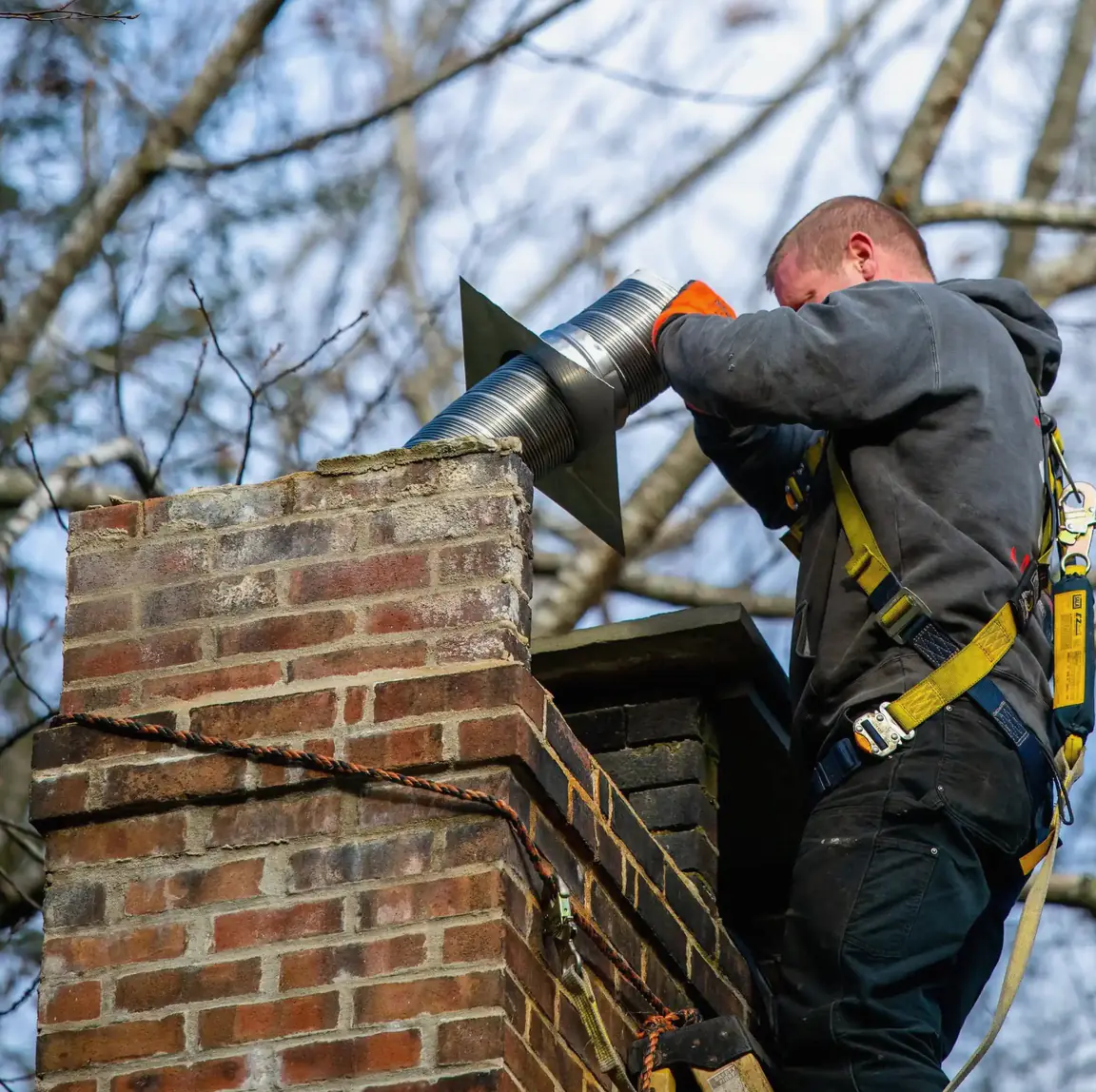
A metal liner can provide a new continuous flue path inside a chimney. Its material, size, and configuration need to match the appliance and the chimney’s route; the installer determines those details from the system.
Use a cast-in-place liner
A cast-in-place system forms a new lining within the existing chimney. Whether it fits depends on the chimney’s structure and the work needed to prepare the flue.
Need help now? (385) 243-7715
How an Inspection Decides Between Repair and Relining
A liner may be repairable when inspection finds limited damage and confirms that the rest of the flue is sound and appropriate for the appliance. Relining may be the better route when the liner is missing, has damage that cannot be addressed as a local repair, or needs to be changed for an appliance or fuel change.
A chimney’s visible exterior does not settle this choice. The inside passage, its dimensions, the appliance it serves, and the route through the house all matter. For work that involves relining, ask what the inspection found and how those findings support the proposed scope. Our chimney liner installation service covers this work.
A gas appliance also needs venting suited to its own requirements; do not assume a liner intended for a wood-burning fireplace will fit it. The appliance instructions and chimney assessment help establish the correct system.
Seven Steps to Prepare for a Chimney Liner Assessment
You can gather useful information without climbing onto the roof, opening the flue, or trying to measure inside the chimney.
- Identify the appliance — Write down whether the chimney serves a fireplace, stove, or other appliance. Note the make and model from its label or manual so the inspector can relate the flue to the equipment.
- Record the fuel — Note whether the appliance burns wood, gas, or another fuel. Fuel type affects the venting requirements, so this detail helps frame the inspection.
- Gather prior information — Collect any past inspection notes, repair records, or appliance paperwork you have. These can show whether the liner or appliance has changed over time.
- Describe the symptom — Write down smoke spillage, unusual operation, or pieces of material found near the firebox, including when you noticed each one. A clear description helps distinguish a recurring issue from an isolated observation.
- Look only at accessible areas — From the ground, note obvious exterior damage or missing parts without climbing or leaning over the chimney. Do not enter the firebox or try to remove material from the flue.
- Ask what the inspection will cover — For possible relining, ask how the interior flue will be examined and whether a video scan is part of the assessment. The CSIA procedure linked above calls for a video scan in a Level 2 inspection of a masonry chimney.
- Review the findings before approving work — Ask which defect needs attention, whether repair is possible, and how the proposed liner matches the appliance. Utah Chimney Sweep explains the work clearly and recommends only the services a homeowner needs.
Why the Wrong Liner Can Leave the Problem Unfixed
A liner that does not suit the appliance or chimney may fail to address the original venting or protection issue. Choosing by a visible crack, a loose tile, or a general rule of thumb skips the checks that establish the flue’s condition and requirements.
Do not use an appliance as a way to test whether a damaged or questionable liner works. If you find debris, notice smoke entering the room, or know the chimney has been affected by a fire or weather event, arrange an inspection before relying on it. A sweep can check the flue and identify whether the issue calls for liner work or another repair.
Need help now? (385) 243-7715
What a Liner Visit Covers and How Long It Takes
An assessment should identify the appliance and fuel, examine the flue, and establish whether the existing liner can be repaired or needs replacement. A liner installation then involves the work required for the chosen system, which can vary with chimney access, the flue route, and whether old material needs to be removed.
The assessment and installation are different parts of the job, so their time requirements differ. The inspection findings and access conditions determine how long the work takes; ask for the work scope and timing based on your chimney before installation begins.
To book an assessment, use our contact page and include the appliance type, fuel, and any symptoms you have noticed. For a separate breakdown of liner pricing, see how much a chimney liner costs.
What to Do When Your Chimney Liner Needs Attention
Start with an inspection rather than choosing a liner by material or price alone. The findings should connect the flue’s condition to the appliance and show whether a repair, replacement liner, or different correction is appropriate.
Keep the appliance details and any prior inspection records nearby when you book. That information gives the sweep a practical starting point for assessing the system and explaining the recommended work.
Frequently asked questions
Can I tell from the fireplace opening whether my liner is damaged?
No. The opening may show loose debris or other clues, but much of the flue is out of sight. An inspection, including a video scan when appropriate, is needed to assess its interior condition.
Does changing my fireplace or fuel affect whether I need a liner?
It can, because a different appliance or fuel may have different venting requirements. Have the chimney assessed for the new setup before using it.
Can I keep using my fireplace if I suspect liner damage?
Do not use it to test the flue when you have found debris, noticed smoke entering the room, or learned of possible chimney damage. Arrange an inspection so the condition can be checked before you rely on the appliance.
How do I know whether to repair or replace a chimney liner?
The inspection must establish how extensive the damage is and whether the existing liner suits the appliance. Limited damage may allow repair, while a missing or unsuitable liner can call for relining.
Get Your Chimney Liner Assessed
Share your appliance type, fuel, and any flue symptoms when you book an inspection.